WeAudit
Finding algorithmic bias through user auditing
BACKGROUND
Artificial intelligence is becoming increasingly entrenched in our daily lives, bringing its own set of harms and benefits. As a UX Researcher in Carnegie Mellon's Human-Computer Interaction Lab, my partner and I uncovered insights behind harmful algorithmic behaviors and biases in order to devise ways for everyday users to detect, identify, and raise awareness of these harms.
MY ROLE
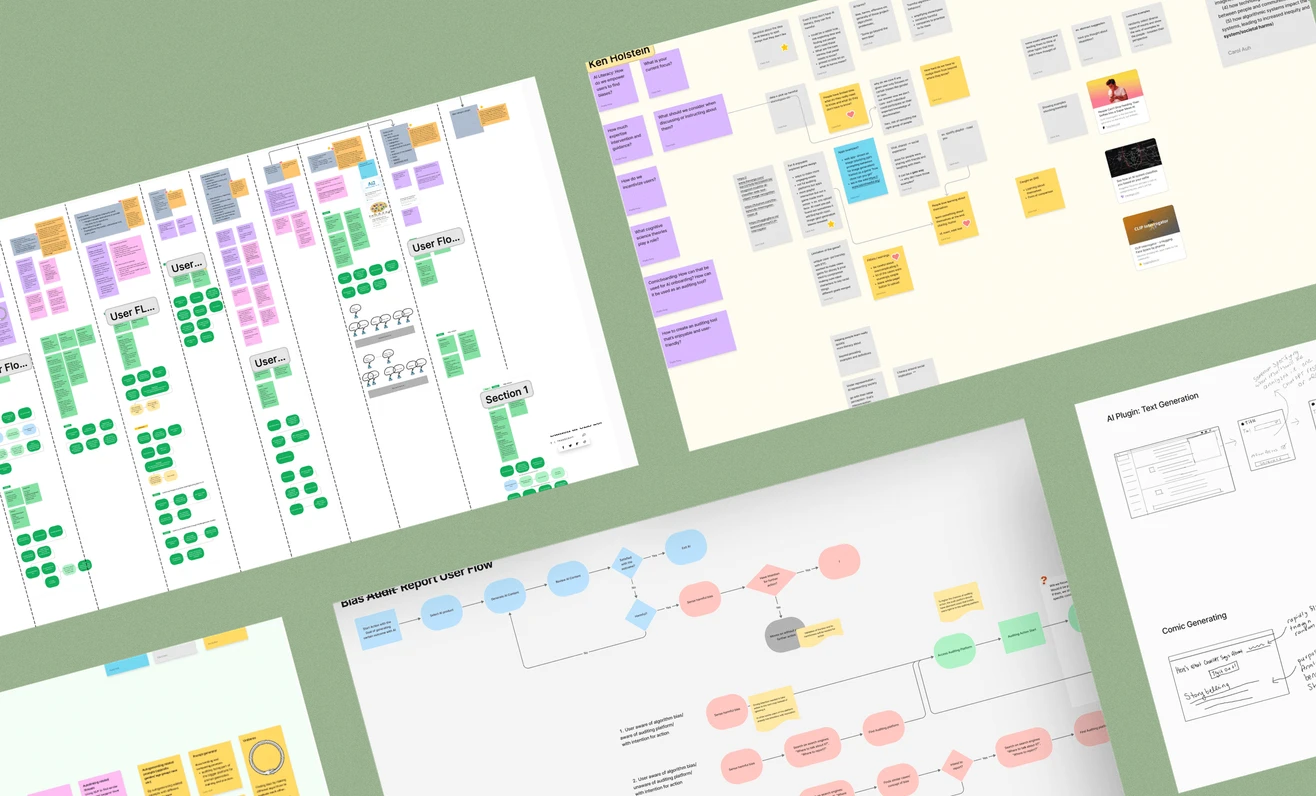
I broke down the complex problem scope to structure our research and define user experience goals. I collected research insights through literature reviews, consultations with experts, case study analyses, and evaluations of online artifacts (articles, social media, videos, etc.). I used these research insights to inform our understanding of artificial intelligence and brainstorm design solutions, which I refined and prototyped. Throughout, I considered various flows, contexts, and use cases in Human-AI Interaction.
Timeline
Summer - Fall 2023
Team
Carol Auh
Deliverables
User research insights
Design solutions
Design prototype
Literature reviews
Tools
Figma
FigJam
PROBLEM
Problem
Everyday users don’t have the knowledge or the tools to properly identify harmful algorithmic behaviors and biases.
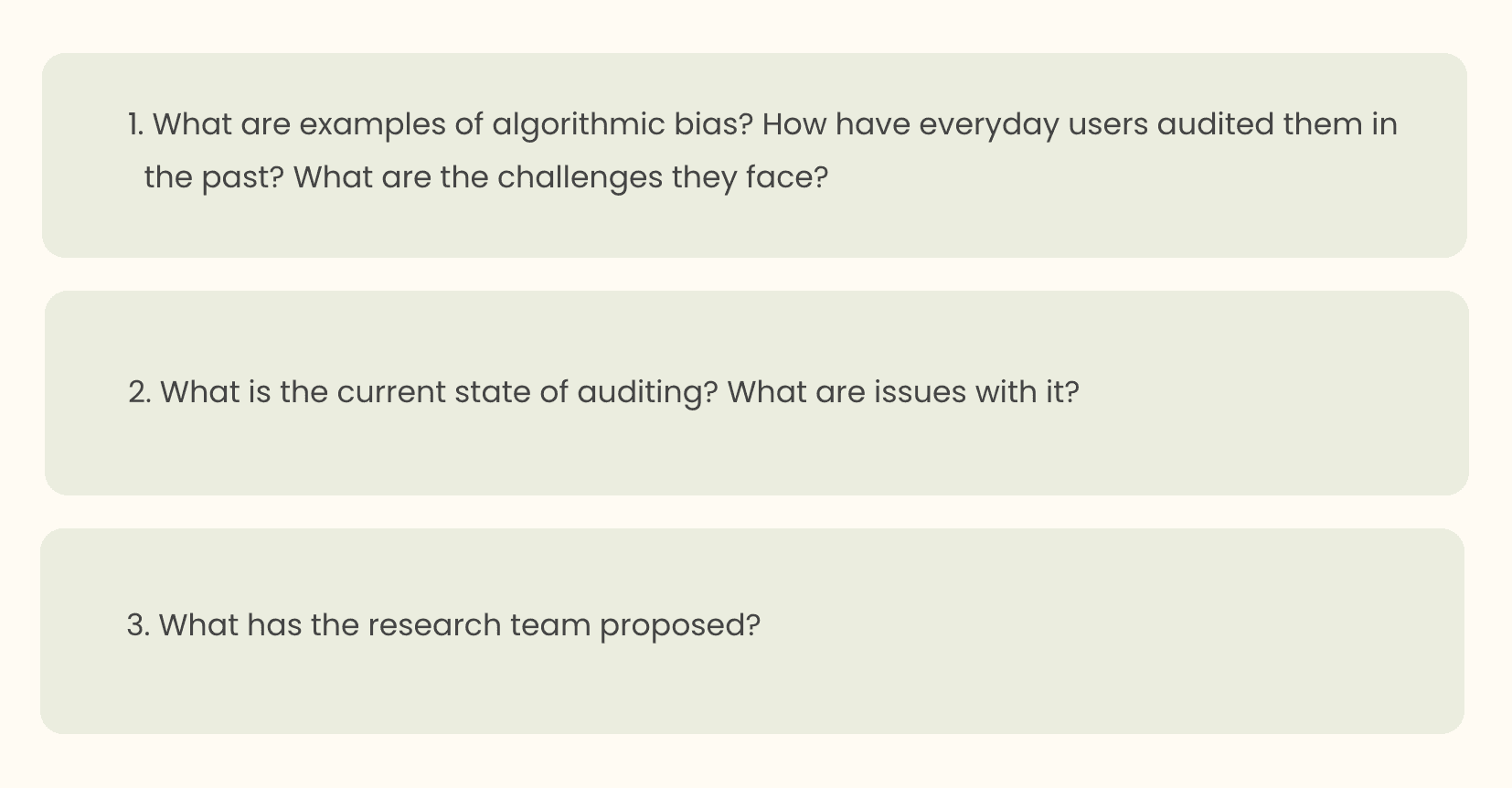
What we need to know
SITUATING
To further understand the problem space and answer the above questions, we conducted literature reviews, identified challenges in current auditing practices, and assessed what work our research team has done in the past.
Literature reviews
We collected insights from articles, four case studies of algorithms, expert presentations, and academic papers.

Users play five main roles in auditing.
1) Hypothesizing 💡
2) Evidence Collection 🗒️
3) Amplification 🎤 Common theme: Collective sensemaking.
4) Contextualization 🌎
5) Escalation 💥
These actions usually occur in an unstructured, spontaneous, and casual environment.
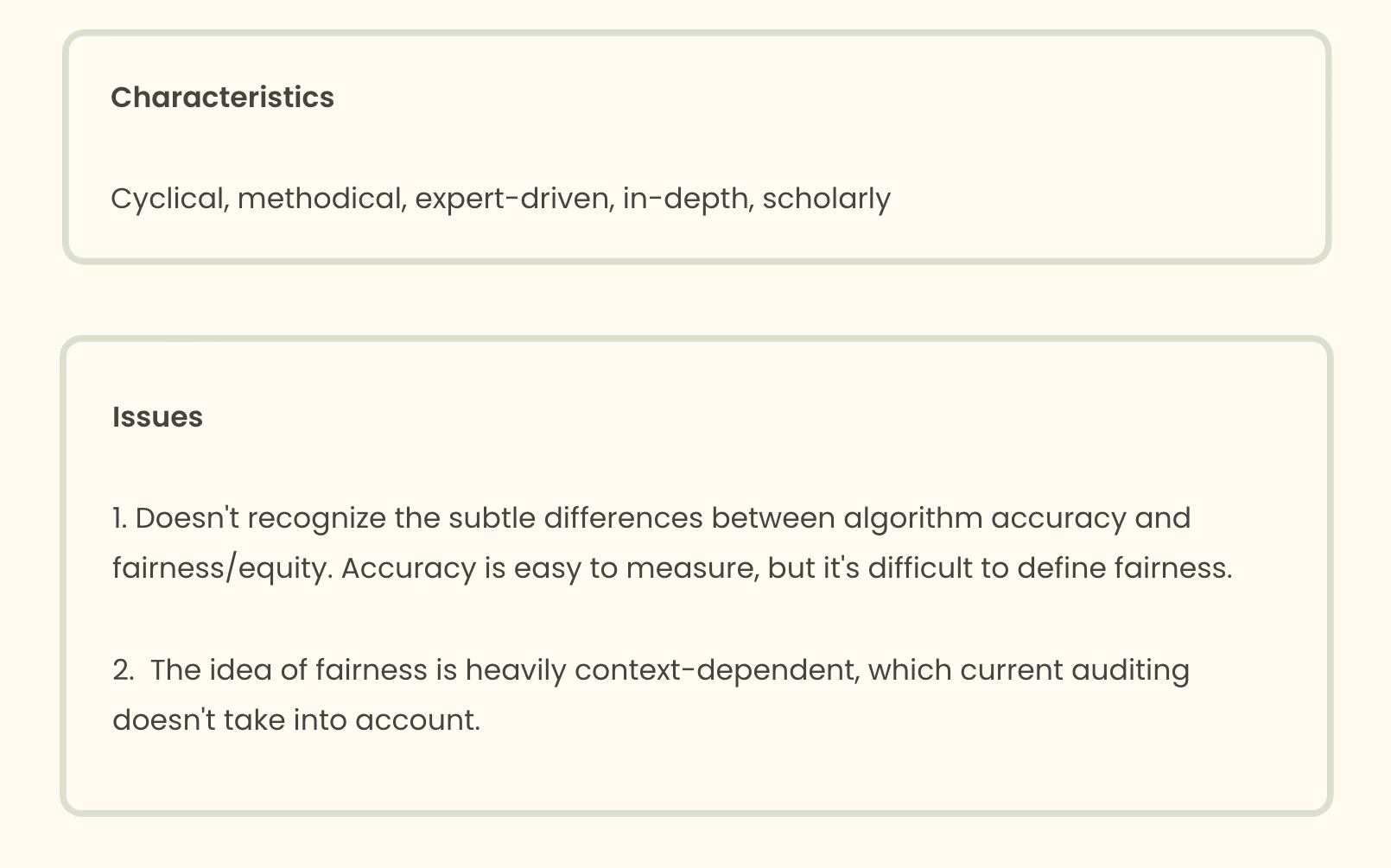
Current auditing
Research team's past work
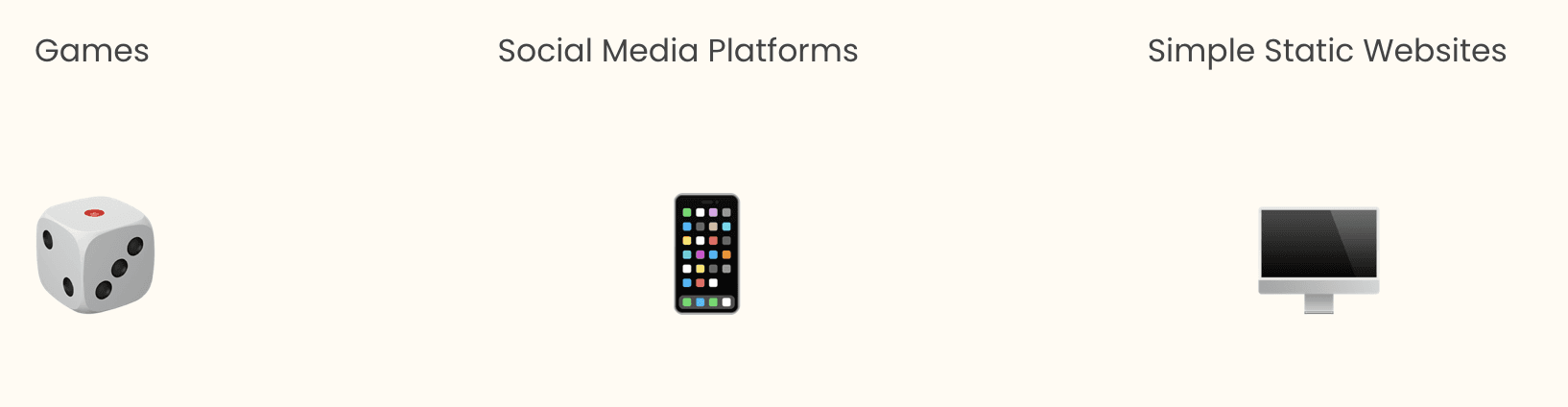
It was focused on being user friendly, interactive, and educational, but lacked direction.
GOAL DEFINITION
From our research, we decided the goal is not about fixing bias. Our goal is to support users in collective sensemaking: detecting, raising awareness, and opening a discussion to spur experts and authorities into action.
Deliverables: By the end, produce a low- to mid-fidelity prototype of our solution.
EXPLORING
Experimentation
We tried out several types of AI and algorithms, mapping out user flows to identify intervention points.
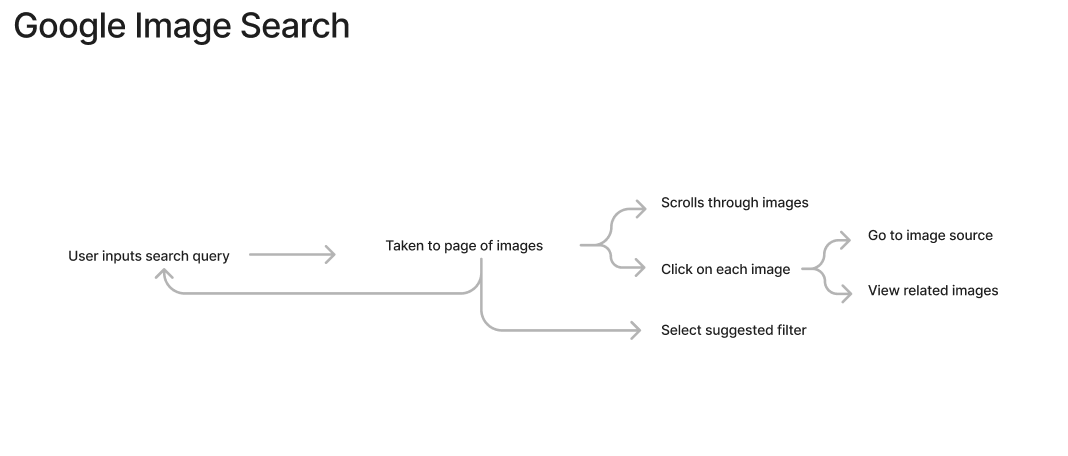
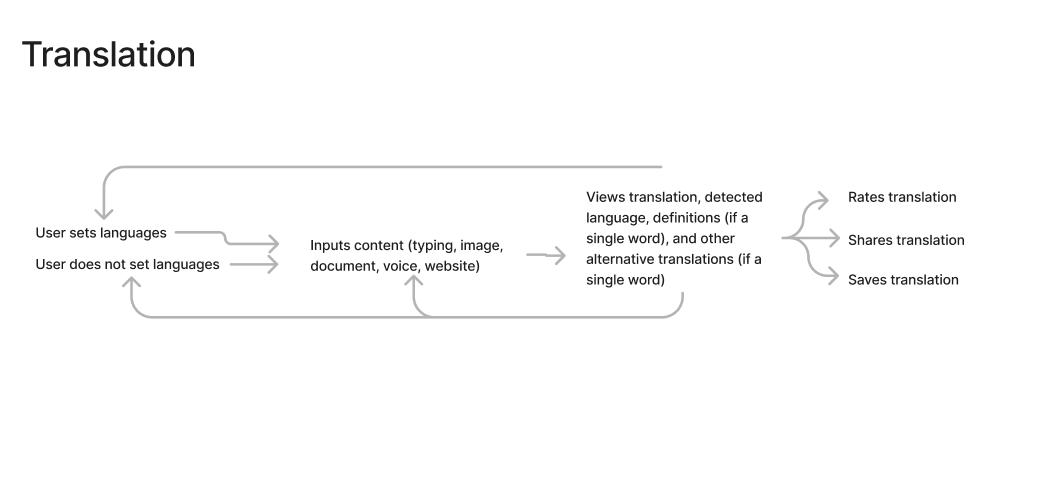
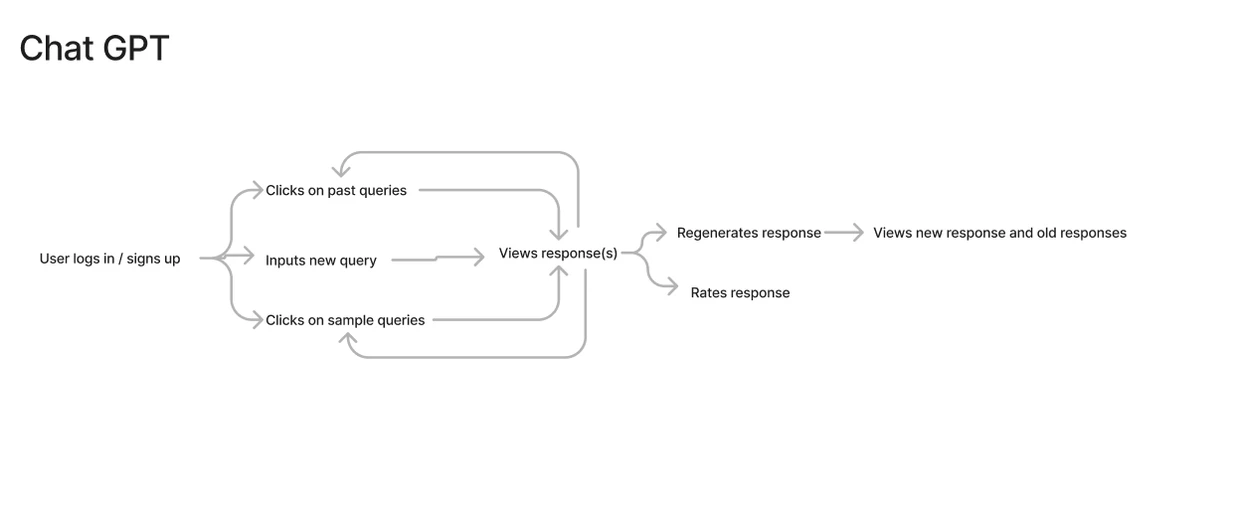
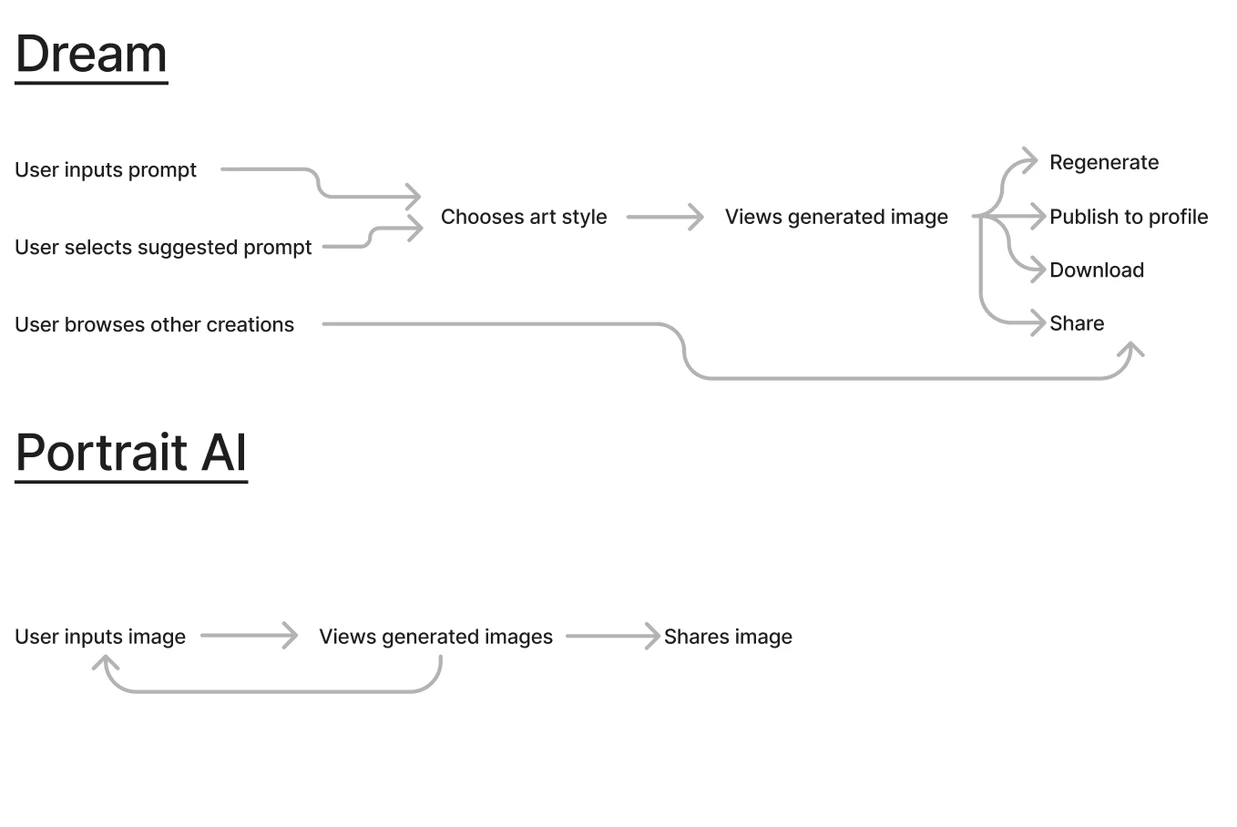
We concluded they all featured similar patterns of requiring user input and then outputting some result.
Moreover, aside from the VMock Resume tool, the underlying processes were hidden from users.
Expert interviews and case studies learnings
Support bottom-up auditing by providing scaffolding and support to users
Users generally prefer qualitative, high-level approaches
Don't overcomplicate — prioritize what users actually need to know
AI is an intimidating concept, so making the tool fun and enjoyable can help
Create incentives to motivate users (intrinsic or extrinsic)
SYNTHESIZING
Based on our analysis of different algorithms and AI tools, as well as conversations with experts, we started our ideation process by defining specific design goals.
Focus on useful but interesting intractions.
Keep it simple, intuitive, and friendly.
Strike a balance between scaffolding users and letting them have agency.
Incentivize users through a motivational mechanism.
Moving forward, our focus would be on text-generation tools like ChatGPT.
IDEATING & REFINING
We conducted three intense rounds of ideating. At the beginning, we brainstormed with no constraints, focused on creativity and free-flow thought.
After each step, as we refined and eliminated ideas, we also incorporated other considerations like technical constraints, resources, and practicality.
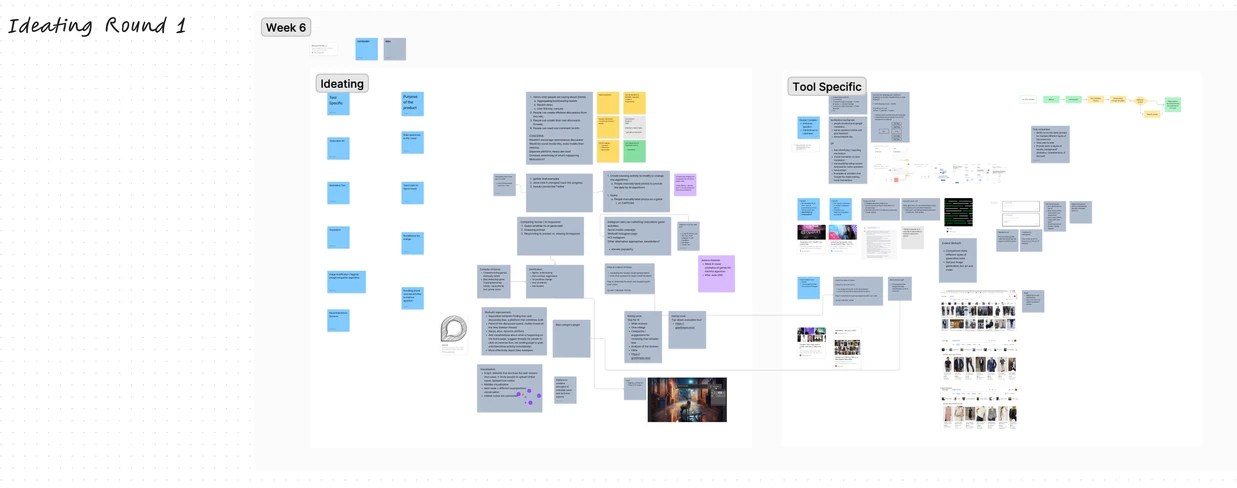
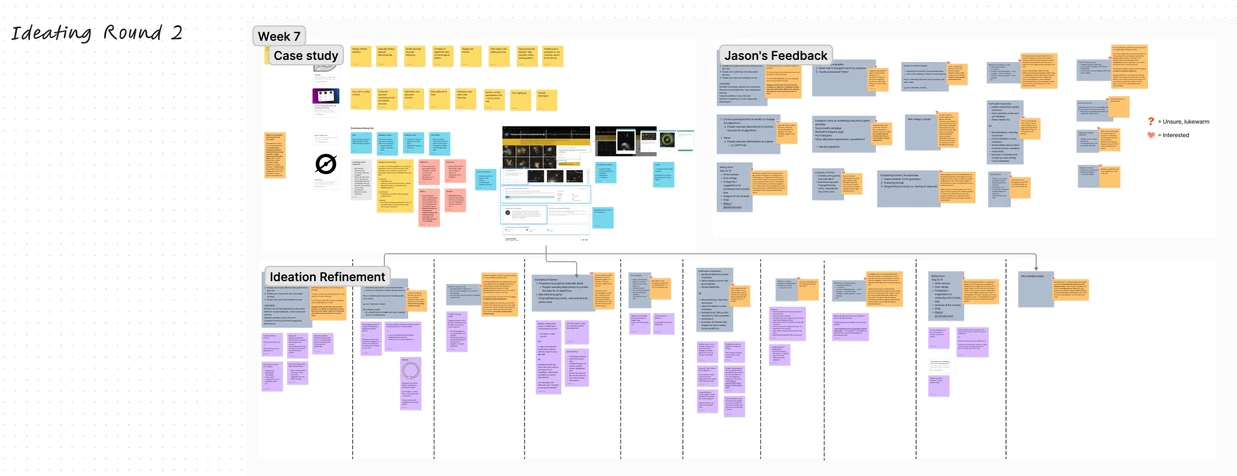
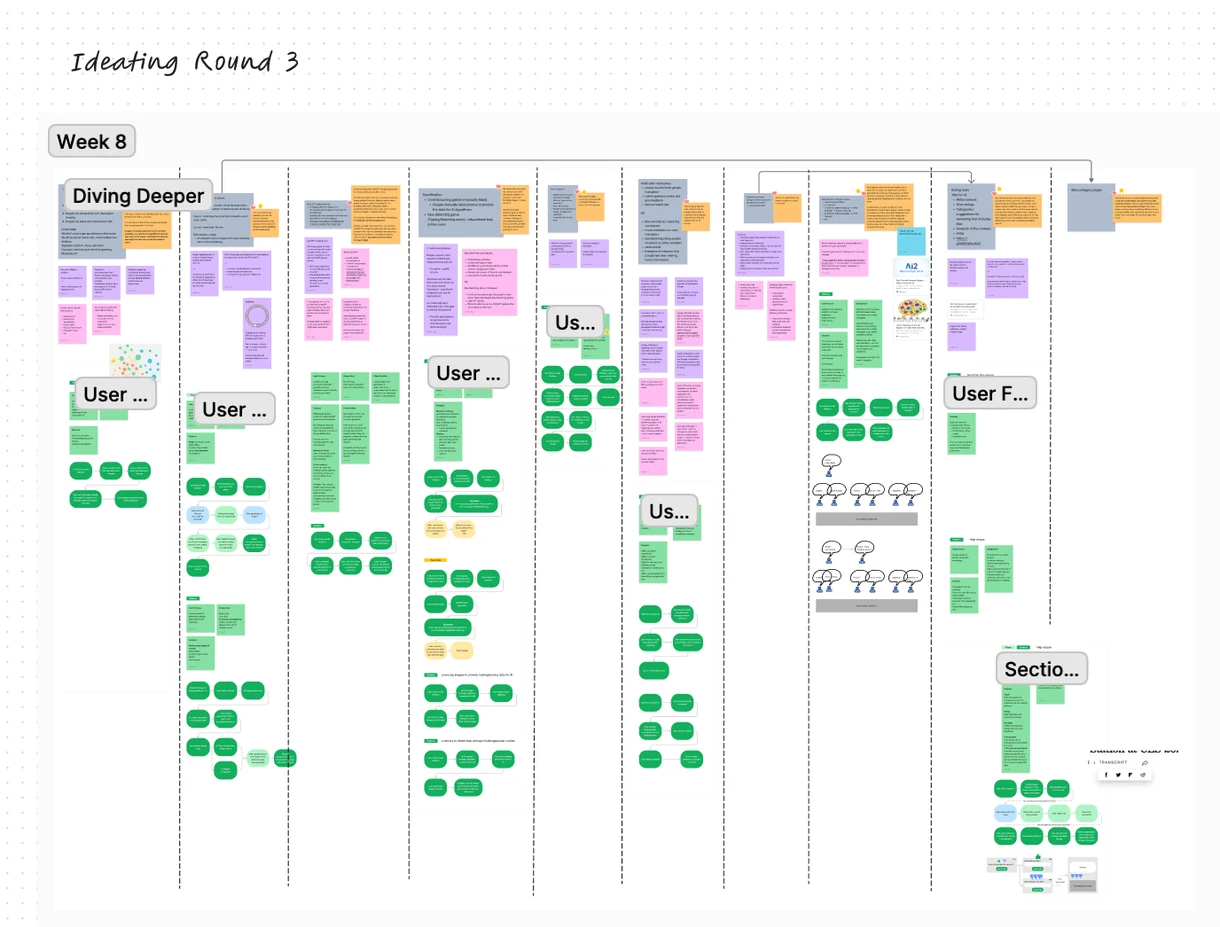
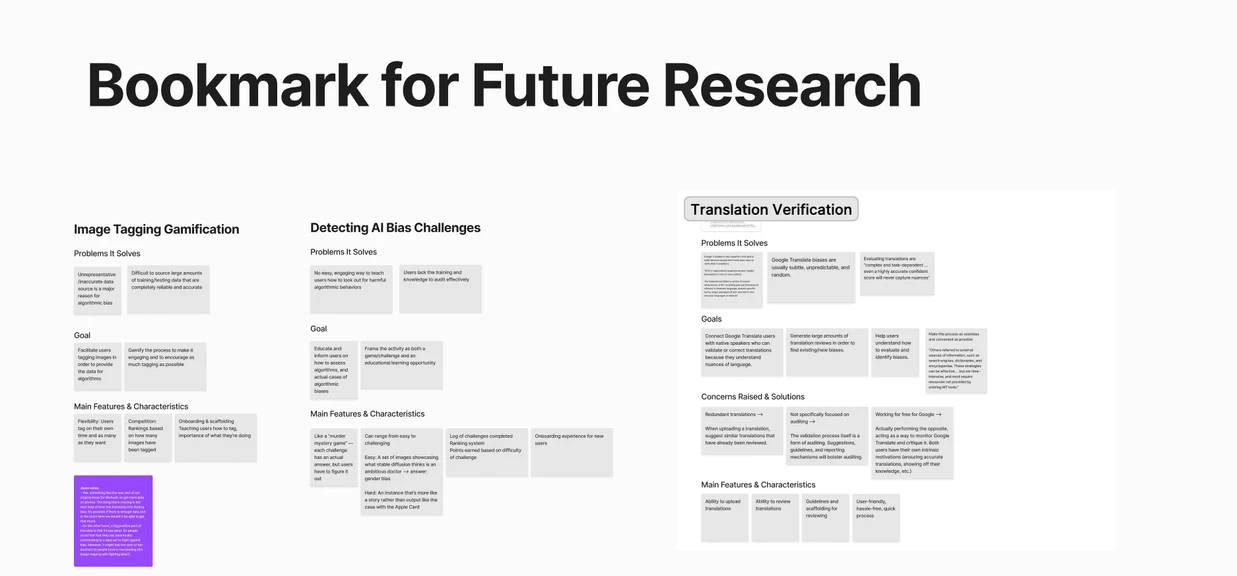
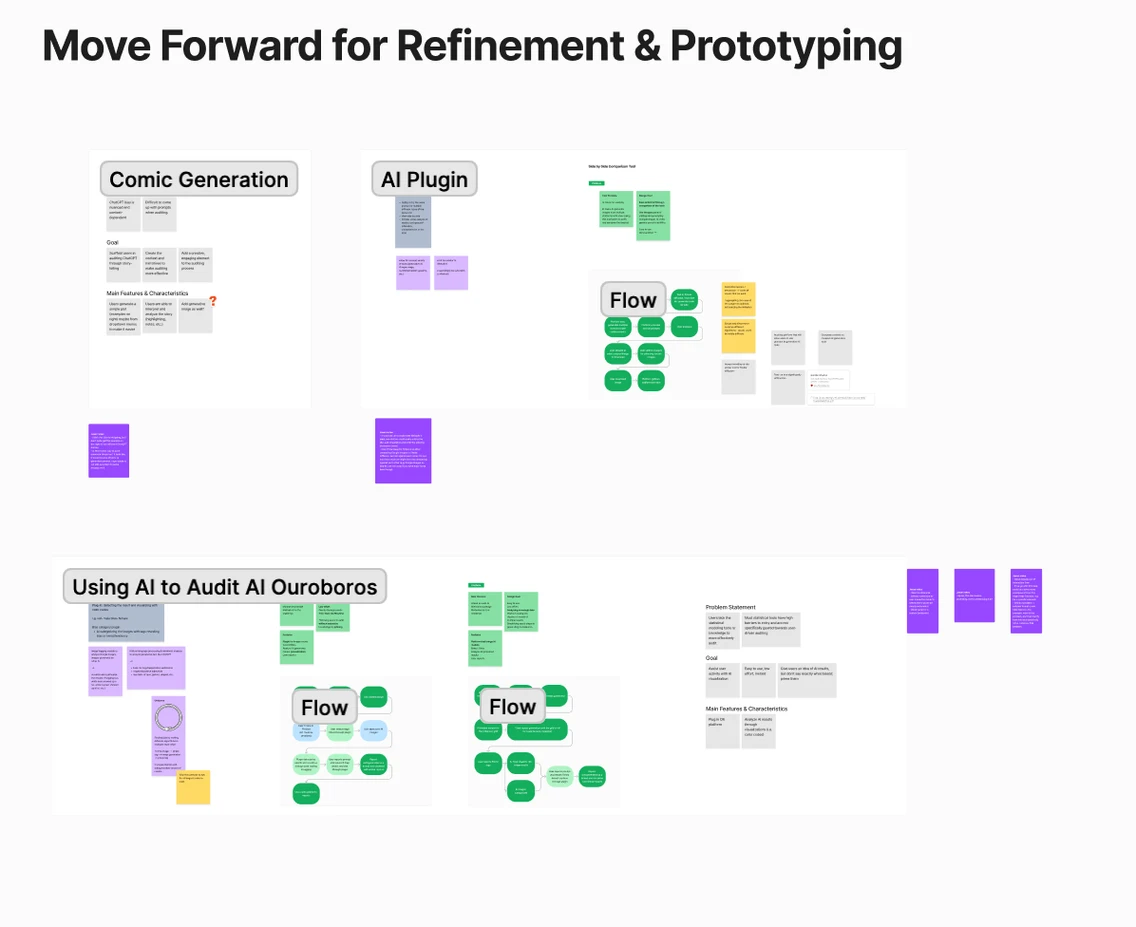
By round three, we had skimmed it down to 10 of our most promising ideas.
We thoroughly reviewed each idea with professors in the realm of design, AI, and social computing.
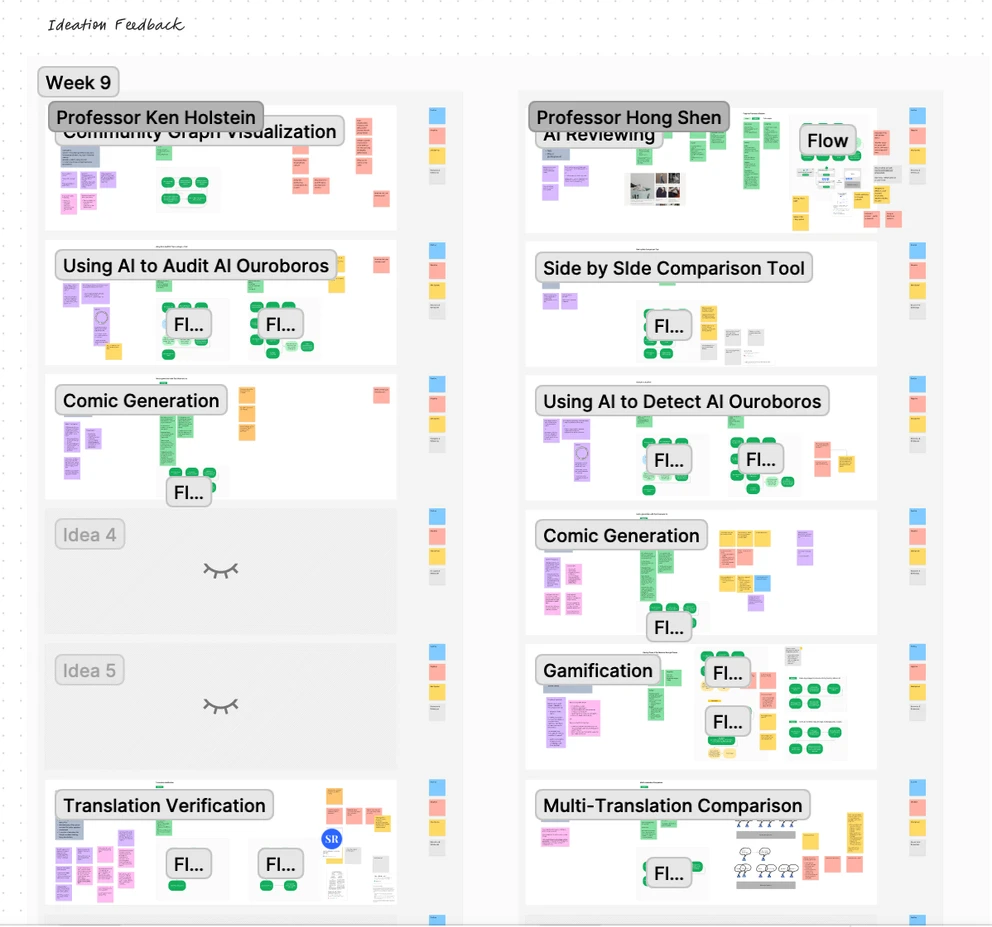
We realized that while we loved many of these ideas, not all of them fit our overarching goal of supporting collective sense-making.
Ultimately, we chose to move forward with three ideas for rapid prototyping, and bookmarked several for future research.
RESEARCH
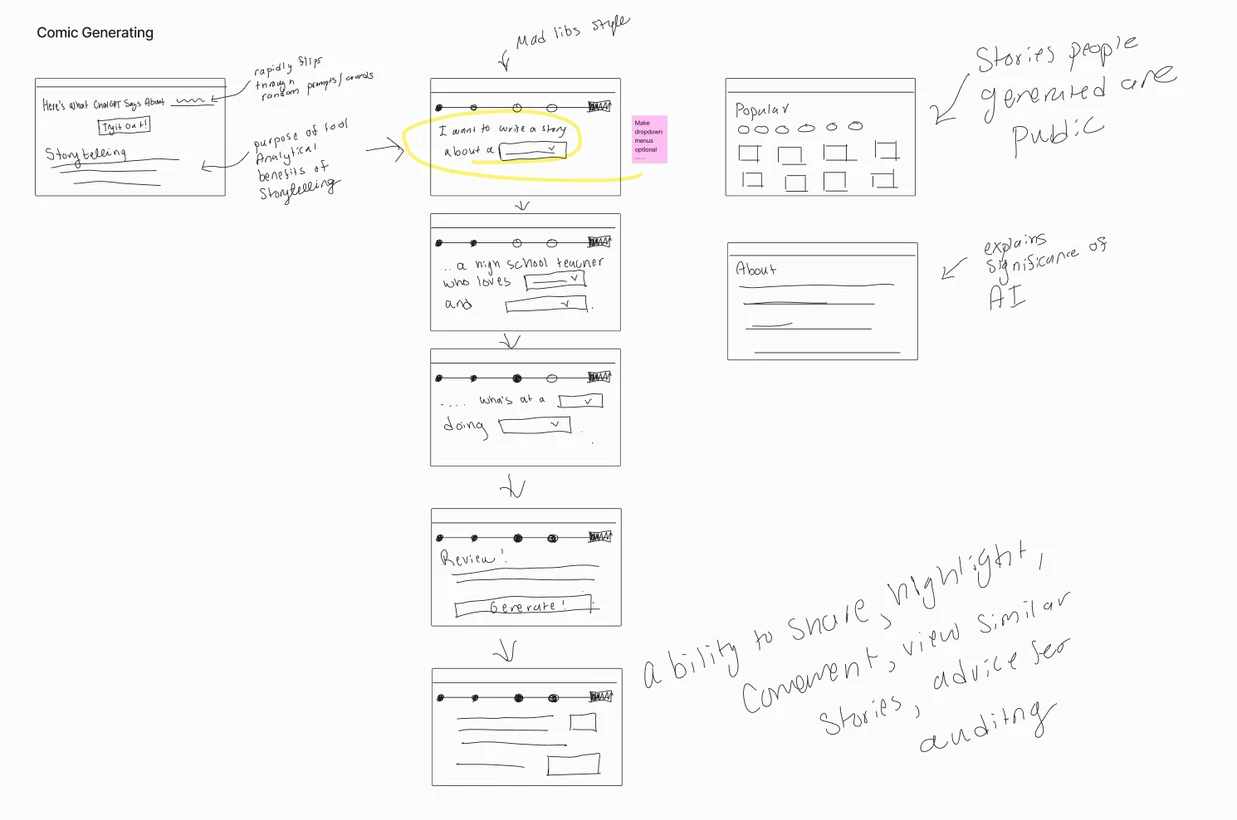
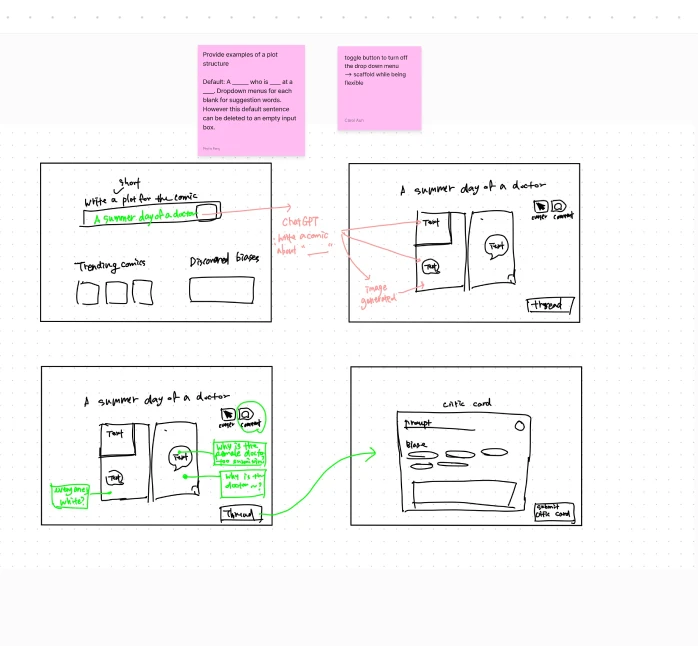
Idea One: Comic Generator
Our research showed that bias found in tools like ChatGPT is nuanced and context-dependent, and that it is difficult to test these tools because users don't know what prompts to enter.
Through the power of storytelling, we can scaffold users in auditing ChatGPT by empowering them to create context and narratives. There is both an educational as well as creative element to this process that motivates user.
Idea Two: AI Plugin
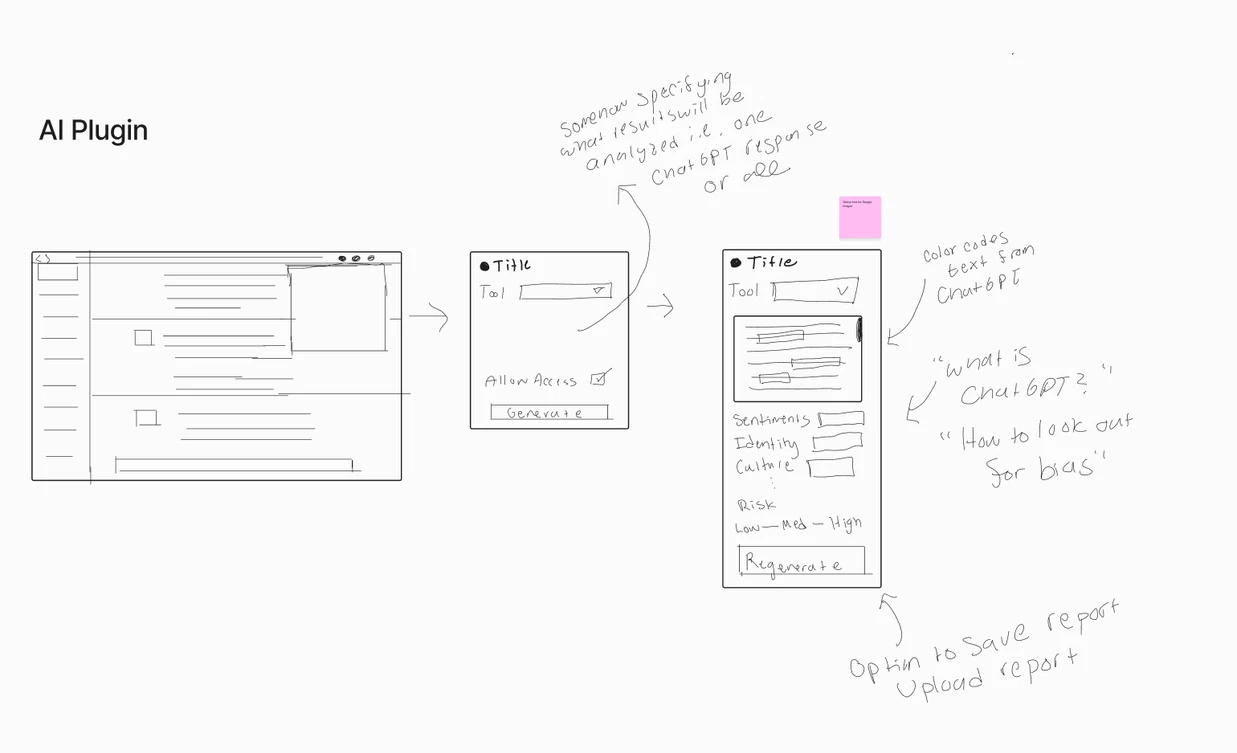
One of the biggest barriers to user auditing is that most users are unwilling to interrupt their usage of a tool to visit an entirely separate platform, not to mention the extra steps it takes to audit.
Through a plugin, users can quickly and efficiently audit ChatGPT outputs. Moreover, a plugin would provide instant feedback to users analyzing the content of ChatGPT, and it wouldn't take up as much real estate, so it would pose a lower risk of interrupting user workflows.
Idea Three: Ouroboros
This tool, as the name suggests, would harness the power of AI in checking AI. It would act as assistive tool to scaffold users in identifying biases, such as by creating visual representations of results.
FINAL PROTOTYPING
Ultimately, we chose to move forward with the Ouroboros tool, because it provided the most innovative solution (using AI to check AI) while still channeling our purposes of supporting and educating users through an interactive experience. We also had a more concrete idea of the features, user flows, and implementation details for Ouroboros; AI Plugin and Comic Generator proved more difficult to concretize while prototyping
REFLECTION
Takeaways

Moving Forward
My partner and I passed on our mid-fidelity prototype to the new cohort of the research team. Their role will be to take our designs through usability testings.
After usability testings, next steps would be to refine upon our prototype's features, design it in a higher-fidelity, and work on establishing a branding idenity, design system, and value prop.
Contact me
phyllis.feng2003@gmail.com
Work
Other projects
About